 The AARP Livability Index™ Scores




AARP Hearing Center






















































Skip navigation
The AARP Livability Index™ platform
Great neighborhoods for all ages
Celebrating 10 Years of Data-Driven Community Improvement: Why the AARP Livability Index™ Platform Matters
Deciding where to live is one of the most personal and important choices a person or family can make. It’s not just about proximity to work or school; it’s about quality of daily life. People look for places where they can feel safe, connect with others, access essential services and grow through different stages of life. The right community offers residents a range of choices that meet their evolving needs.
AARP launched the AARP Livability Index™ platform 10 years ago as a powerful, data-driven tool to help individuals, families and communities better understand what makes a place livable and identify where changes can be made to improve livability for everyone. Drawing on decades of research, the tool is built around one fundamental understanding: A livable community is one where people feel safe, can afford their homes, can get around easily and have plenty of services and activities close by. When a neighborhood offers all these elements, people can stay independent, remain in their homes as they grow older and stay connected to friends, work and community life.
Since its launch, the AARP Livability Index™ platform has become a resource for people planning a move, advocating for change or making decisions that shape the future of their neighborhoods. As the platform celebrates its 10th anniversary, it continues to help users, from everyday residents to public officials, turn data into action.
Origin and Purpose
The AARP Livability Index™ platform was developed to answer a growing need: How can people better understand the communities where they live, work and age? Although many tools existed to rate cities on factors such as job growth or real estate values, few centered on the needs of people across all ages, especially older adults and caregivers.
AARP began by asking people what livability meant to them. Through focus groups, a large national survey and dozens of in-depth interviews, researchers learned that Americans care deeply about a wide range of community features. People value affordability, safety, access to parks and services, clean air and water, walkable neighborhoods, and connections to jobs and public transportation. The responses were clear: There is no one-size-fits-all answer to livability. Rather, the definition is deeply personal and varies by life stage, health and circumstances.
To bring those values to life, the AARP team, including an advisory group of livability experts, reviewed more than 250 possible data indicators to select a set of meaningful, reliable and actionable measures. These were grouped into seven core categories: Housing, Neighborhood, Transportation, Environment, Health, Engagement and Opportunity.
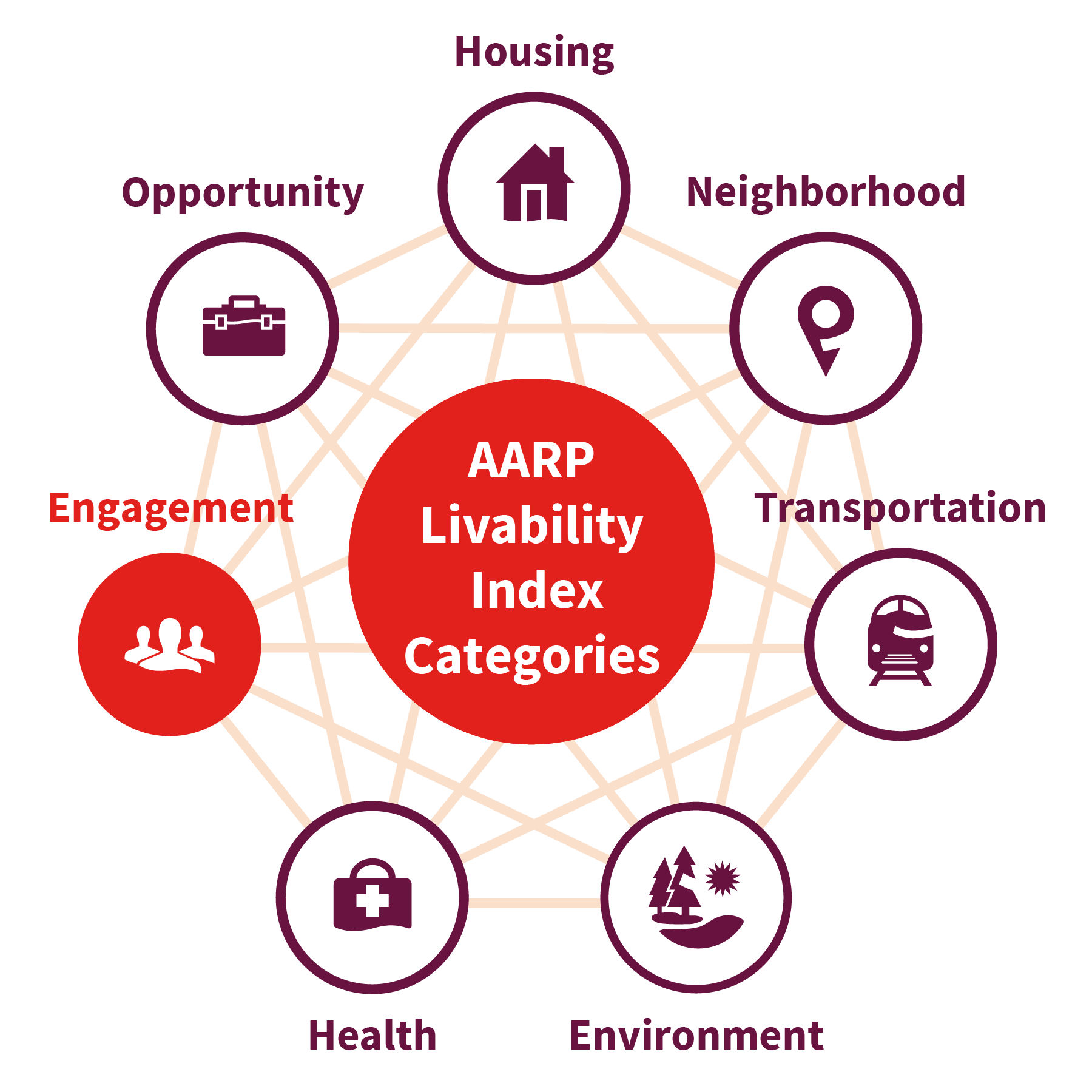
Each metric had to meet several standards. It had to relate directly to livability, be based on high-quality national data, work at the neighborhood or local scale, be understandable to the public and — perhaps most importantly — connect to policies and community decisions that residents and leaders could influence.
The result is a tool that doesn’t just describe what is; it also highlights what’s possible. The AARP Livability Index™ tool is designed to help users explore their communities, identify areas for improvement and champion policies that support all ages and abilities.
How Different People Can Use the AARP Livability Index™ Platform
Over the past decade, a wide variety of people have used the AARP Livability Index™ platform to make smarter, more informed decisions about where to live, work and get involved. Here are just a few ways different audiences may put the tool to work.
Individuals and families can use the platform to compare neighborhoods based on what matters most to them — such as housing affordability, access to health care or proximity to transit. It’s especially helpful when deciding where to relocate or planning for the future.
Caregivers may use the platform when helping a loved one find the right community or when considering changes to their own home. The platform provides useful information about services, amenities and accessibility that support caregiving responsibilities.
Civic advocates and community leaders may use the data to support campaigns for local improvements, like expanding transit options, increasing affordable housing or improving public spaces. The platform helps back up advocacy with facts.
Local decision makers may look to the platform as a trusted source for evidence-based policy. It helps mayors, city councils and county staff identify challenges, set goals and track progress in areas that matter most to their constituents.
Urban planners could incorporate AARP Livability Index data into long-range plans for transportation, housing and public services. The tool can help ensure that their communities grow in ways that are inclusive and age friendly.
Real estate professionals may use the platform to give clients a fuller picture of what a neighborhood offers beyond schools or home prices. It helps people match their personal needs with community features.
Developers and other industry leaders may reference the platform to identify high-potential communities for business expansion or new enterprises.
Why the AARP Livability Index™ Platform Remains So Relevant Today
According to AARP’s 2024 Home and Community Preferences Survey, most adults, especially those ages 50 and older, want to stay in their current homes and communities for as long as possible. But many worry their surroundings won’t support them as they age.
44% of adults ages 50-plus expect to relocate at some point.
71% of older adults want to remain in their current home.
33% expect to provide care for a loved one in their own home.
The AARP Livability Index™ platform helps families make more informed decisions. It provides insight into whether their communities are truly equipped to support aging in place and shows where changes can be made. For example, many families are building accessory dwelling units (like in-law suites) to support multigenerational living and family caregiving. Others are considering moves to neighborhoods that are walkable, close to health services or better connected by transit.
At the community level, the tool is helping to shape conversations about housing affordability, transportation equity, access to health care and inclusive design. It’s also helping cities and towns become more welcoming for residents of all ages — not just older adults but families, workers and young people, too.
Looking Ahead: The Next 10 Years of Livability
Imagine a future where every zoning decision, budget vote or infrastructure plan considers how it supports livability for people of all ages. A future where data helps unlock safer streets, healthier homes and stronger neighborhoods. With the right tools and the right information, this future is within reach.
As the AARP Livability Index™ platofrm enters its second decade, the mission remains the same: to help people and communities make better choices by providing clear, useful data. But the work is far from over.
The AARP Livability Index™ platform is more powerful than ever. Anyone can explore the livability of their own community. By visiting the tool, users can enter a ZIP code or address and see how their neighborhood scores across the seven key categories. They can compare communities, identify strengths and discover areas for growth.
The future of livability is about more than scoring and identifying challenges; it’s about reimagining how communities are built, governed and experienced. The next generation of the platform will continue to evolve with new data, more personalized tools and deeper insights into how communities function.