 The AARP Livability Index™ Scores




AARP Hearing Center






















































Skip navigation
The AARP Livability Index™ platform
Great neighborhoods for all ages
Ways to Simplify Your Home by Downsizing and More
by AARP and Diana Lind
Bruce Thompson has been on a 10-year journey of downsizing from a 5,000-square-foot home to a 1,100-square-foot apartment he shares with his wife in Grand Rapids, Michigan.
Thompson became passionate about downsizing in his 50s after watching his parents struggle with the process. In his professional life, Thompson offers design services, technology integration, and construction management to real estate developers, with the goal of simplifying and streamlining housing for aging in place. His vision of a more streamlined lifestyle doesn’t just mean a smaller house. Thompson embraces the concept of “cohousing” or “pocket communities” where homes are centered around shared spaces with communal amenities and reduced costs and hassle.
Thompson is spearheading one such new development in West Michigan. He says it would be great “if we could get people downsizing earlier, when it’s their choice.” While individual homes are smaller than typical single-family homes, the development has shared amenities, such as a gym and co-working space, so that each household doesn’t need one of its own.
Thompson believes that these kinds of communities may be desirable for older adults who aren’t necessarily retired but are looking to age in place. “If you're moving in your late 70s, typically you're not solving your own problems, somebody else is - and you might not like how they're solving it for you,” he says. “Or you're moving because there's a health condition, and so it's a stressful time to downsize, especially if you've been in a home for 30 or 40 years.”

In the book, The Second Fifty: Answers to the 7 Big Questions of Midlife and Beyond, AARP Executive Vice President and Chief Public Policy Officer Debra Whitman notes that one of the key concerns for many older adults is where they will live as they age. At the same time, according to an AARP’s 2024 Home & Community Preferences Survey, only half of adults age 18 or older have confidence that their community will continue to meet their needs as they age. To plan for the future, many older adults are downsizing or making other adjustments to their housing to simplify their lives.
Meanwhile, the older adult population looks different than that of previous generations and may require new housing solutions. “The retirement moment at 65 is changing. People are continuing to work, but maybe they're working differently,” Thompson says. Nowadays, more older adults over 60 are living alone, and yet a different and growing segment of older adults are living in multigenerational households
These shifts suggest that there will not be one housing solution that fits all. Cohousing and nonprofit housing models that pair social connection and other supports such as shared healthcare workers, are critical options. In recent years, cities from Alexandria, Virginia, to Seattle, Washington, have adopted policies enabling co-living communities. These are not age-exclusive and feature apartments with independent living and shared amenities, such as a central dining room or common rooms, that can foster an intentional sense of community. Washington State Senator Jesse Salomon said a recently passed co-living bill “will help young people live in high-demand areas like Capitol Hill [neighborhood in Seattle] and will help retirees create communities amongst themselves.”
For others, the idea of simplifying may mean no longer being a homeowner. Rates of American homeownership rise as people age; 81 percent of people aged 70 to 74 years old are homeowners. But, starting at age 75, the ownership rate begins to drop as more older adults seek the accessibility and amenities available in apartment buildings.

Financial considerations may be part of the rationale for renting. AARP research shows that among adults ages 50 and older who anticipate needing to make a move, affordability is a major driver. They rate the cost of their current rent or mortgage, a desire to lower their housing costs or having a home that costs less to maintain, and the cost of property taxes as their top decision factors.
Although higher mortgage rates and lessened housing inventory have made moving more challenging in recent years, Laura Fenton, author of the book, The Little Book of Living Small, notes that moving can still have financial benefits. “Almost across the board, if you're downsizing, you're lowering your monthly costs,” she says. “Those lower costs can extend to not just the cost of a house but lower monthly utilities, lower maintenance costs over time, and spending less on furniture and decor.”
Fenton says he also views the upside in moving as “an opportunity to go through that process of assessing what you own,” and contemplating what can be eliminated. Many people think that downsizing simply involves moving to a smaller home, but the process can involve years of rethinking one’s personal items. “I think that there can be real joy in giving things away,” adds Fenton. “Truly once you start, it's almost infectious. And today more than ever there are like so many resources to give things away to, like Buy Nothing groups.” Additionally, websites from eBay to Facebook Marketplace make it easier than ever to sell unneeded items.
Before moving, Fenton proposes a “dress rehearsal” for downsizing. She suggests putting a piece of painter’s tape across the entrance to rooms that go unused, such as a formal dining room, a guest bedroom or an attic, to become aware of how much space is not being used. “I love the idea of closing off some of the areas you don't regularly use and try to just study and observe what your life is like without them,” she says. “It’s really hard for a lot of people to let go of things. I think that is one of the biggest hurdles to downsizing, but It’s a necessary piece. You don’t want to try to Tetris your old stuff into your new home.”
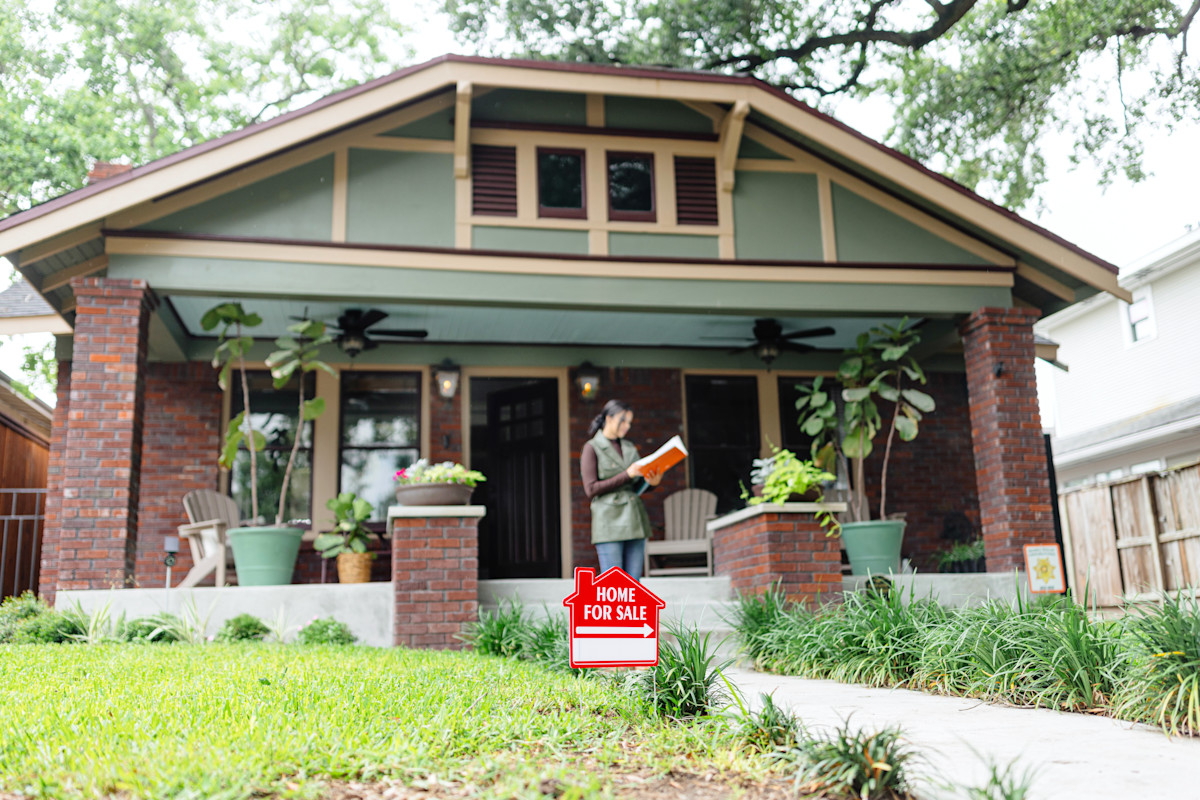
For people who intend to remain in the same home, there are tools that make it easier to maintain. Fenton encourages hiring a professional organizer to help take stock of what’s in your house and what can be sold at yard sales. AARP’s book, Downsizing The Family Home: What to Save, What to Let Go by Marni Jameson has a companion workbook that provides advice and how-to checklists to guide readers through the process.
Best-selling books, such as The Life-Changing Magic of Tidying Up: The Japanese Art of Decluttering and Organizing by Marie Kondo and The Gentle Art of Swedish Death Cleaning: How to Free Yourself and Your Family from a Lifetime of Clutter by Margareta Magnusson have spawned television shows that can also provide inspiration. This fascination with better organizing homes has supported numerous “cleanfluencers” on social media whose millions of followers watch for tips on topics such as how to efficiently store food in a pantry.
Getting started sooner rather than later with streamlining belongings may not only help yourself- but also your family. Fenton’s final suggestion to unload unnecessary objects sooner rather than later is in line with Thompson’s experience of watching his parents downsize as they aged. “There’s value in not burdening your kid,” Fenton says. “It feels nice to lighten up, no matter what stage of life you're in.”
Read More Articles

In the News
Creating More Resilient Housing
As 77 percent of older adults seek to age in place, having a resilient home that can...

In the News
Finding a Walkable Neighborhood to Step into a New Phase of Life
Research has shown that walking provides powerful health benefits, decreasing the...

In the News
Ways to Simplify Your Home by Downsizing and More
While individual homes are smaller than typical single-family homes, the development...