 The AARP Livability Index™ Scores




AARP Hearing Center






















































Skip navigation
The AARP Livability Index™ platform
Great neighborhoods for all ages
Finding a Walkable Neighborhood to Step into a New Phase of Life
by AARP and Diana Lind
For nearly 30 years, Jan Levine and Michael Zuckerman lived in Narberth, Pennsylvania, a suburb of Philadelphia they chose because it offered an ideal community for raising their two children. But when they became empty nesters almost a decade ago, they realized they wanted a different rhythm to their lives. Instead of commuting to their jobs by train or car, they wanted to walk to work. Rather than load up the car on the weekly grocery shopping trip, they wanted to have amenities such as grocery stores and fitness centers nearby for a more spontaneous and less car-centric life. So for the next act of their lives, they chose to move into an apartment building in a walkable neighborhood of downtown Philadelphia with an AARP Livability Index™ Neighborhood Score of 62, scoring in the top half of all communities nationwide.
The couple benefitted from more than closer proximity to work and recreation in making this move. Research has shown that walking provides powerful health benefits, decreasing the risk or severity of cardiovascular diseases, type 2 diabetes, and cognitive impairment, while also improving a person’s overall sense of well-being. As many older adults aim to age in place, moving to a neighborhood with sidewalks or car-free common areas can make staying healthy easier and enable more social connection by reducing reliance on driving to access daily needs
For Levine and Zuckerman, their neighborhood makes getting in steps easy. “You might walk two miles a day just going to the grocery store and running other errands,” Levine says. Plus, the density of amenities and historic architecture is mentally stimulating. “This was a move toward vibrance,” she says. She now knows her neighborhood shopkeepers and says it feels “village-like, almost a little European” to be able to walk around the corner to pick up some fruit or fish at a small shop nearby. Levine and Zuckerman often go more than a week without using their car. When they lived in Narberth, car commuting was so essential that they owned two.

Though Levine and Zuckerman made their move as part of their plan to age in place, there were some unanticipated benefits. For example, they didn’t realize how much they would appreciate the ability to walk, rather than drive, to doctor’s appointments. “It’s a relief to not have to deal with the burden of driving, worrying about traffic or if there’s a snowstorm, and then having to park, just to get to an appointment,” says Levine. While Levine is years away from being concerned about her vision and reflexes in driving, she takes additional comfort in knowing that driving won’t be a barrier to getting to healthcare.
Levine and Zuckerman are emblematic of a growing trend: 44 percent of American adults age 50 and older who anticipate moving would do so to access homes in walking distances to stores and restaurants, according to the latest AARP Home & Community Preferences Survey. "A walkable community offers options for people of all ages and abilities to move around their community and connect with one another” according to Rodney Harrell, AARP vice president of family home and community. “These options are part of what makes a livable community”
Lina Panza, a realtor in Montclair, New Jersey, whose company focuses on homes in walkable communities, says “it’s definitely a trend” that more older adults are staying in – or moving to – Montclair because of its walkable downtown area. In the past, many empty nesters would move to nearby counties with lower taxes once their children graduated from high school; now more older adults are staying in or moving to walkable suburbs like Montclair.
But, Panza says, “There is more demand for that type of housing than there is supply.”
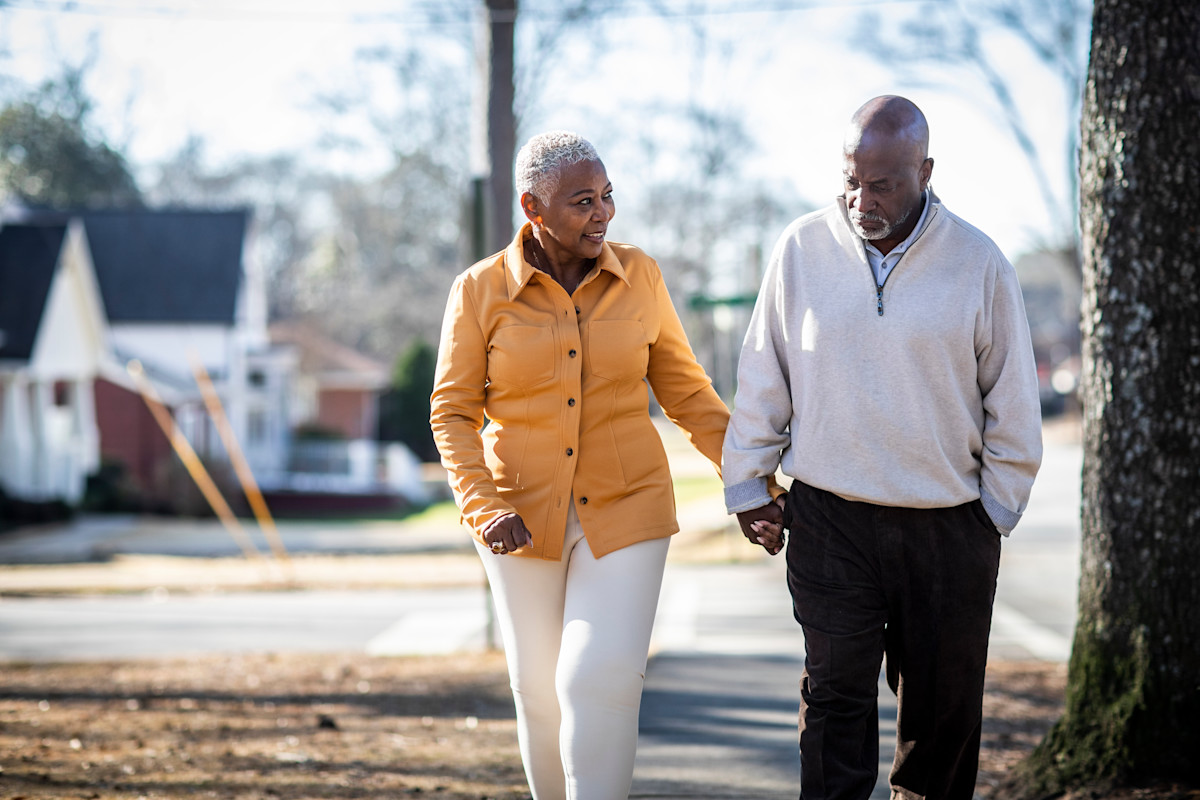
Despite growing interest in walkable neighborhoods, a Smart Growth America report notes that only 1.2 percent of the top 35 metropolitan areas in the U.S. include walkable neighborhoods. And finding suitable housing within those places, especially during the current housing affordability crisis, can be tough.
AARP created the AARP Livability Index™ platform as a first-of-its-kind, data-driven, web-based tool that measures every community and neighborhood in the U.S. for the key amenities and services that affect the quality of life for people of all ages in the areas of housing, transportation, neighborhood, health, environment, social and civic engagement, and educational and economic opportunity. Check out our category fact sheets to learn more about the key measures the platform uses in each of the categories to score and rank neighborhoods.
Jennifer Molinsky, director of the Housing an Aging Society Program at the Harvard University Joint Center for Housing Studies, agrees that finding the right kind of housing is a challenge. “Moving to a walkable neighborhood within one's suburb would be ideal for many people but finding that house that is affordable, accessible, suitable in all these different ways is difficult,” she says.“I love the idea of having alternatives to the car and to be able to engage in your community. It's less isolating, all of those good things. But I think we need to do better about supporting walkable housing options.”
Indeed, many small cities, towns, and suburbs with walkable centers from Madison, Wisconsin, to Glenwood Springs, Colorado, charge a premium for their walkability.
For those who are considering making a move to a more walkable community, the AARP Livability Index™ website can be a helpful resource. The site provides a tool to research communities around the country and see how livable they are. The platform uses over 50 sources of data to score how well communities serve their populations in terms of housing, neighborhood convenience, environment, transportation, security, and opportunity. Using the AARP Livability Index quiz, people can highlight their preference for communities with close proximity to amenities such as parks and libraries, and convenient transportation options to see what kind of communities match their lifestyles.
In addition to using the AARP Livability Index™ platform, Panza encourages people to investigate real estate listing websites such as Zillow and Redfin, which now include information from the website Walk Score, showing a location’s walkability.

Molinsky suggests walking around potential neighborhoods to see aspects of the community – the condition of sidewalks, the accessibility of train stations – that augment the information found in online tools.
Molinsky also believes it’s important for buyers to look ahead when visiting new neighborhoods. “Imagine where you want to be if your needs change or if your mobility changes. If you no longer drive, if you have more difficulty walking,” she says. The AARP Livability Index™ platform enables people to research which communities are best suited to their future needs for amenities such as transportation, social engagement, or attainable housing.
Panza encourages people to test out a neighborhood’s walkability by simply parking their car and seeing what they can walk to in 15 minutes - also taking note of how many other people are walking around.
“There are suburbs where you never see anyone outside of a car. Whereas in Montclair, on a Saturday afternoon when the weather's good, it looks like Brooklyn,” Panza says.
Levine and Zuckerman decided to make their move to Philadelphia quite easily: they had lived there once before, as newlyweds in their 20s. While they knew it was a great city to live in as young professionals, they have found the city may be an even better fit for this stage of life. Levine says the move enhanced her social life, adding: “Living downtown makes lunch and dinner dates so easy - much more of each day and evening to enjoy. It supports a very full and invigorating life.”
Read More Articles

In the News
Creating More Resilient Housing
As 77 percent of older adults seek to age in place, having a resilient home that can...

In the News
Ways to Simplify Your Home by Downsizing and More
While individual homes are smaller than typical single-family homes, the development...

In the News
Finding a Walkable Neighborhood to Step into a New Phase of Life
Research has shown that walking provides powerful health benefits, decreasing the...