 The AARP Livability Index™ Scores




AARP Hearing Center
















































Skip navigation
The AARP Livability Index™ platform
Great neighborhoods for all ages
Creating More Resilient Housing
by AARP and Diana Lind
In 2024, the U.S. endured more than two dozen billion-dollar natural disasters, from hurricanes to tornadoes to winter storms. There are 32.7 million residential properties at moderate or greater risk of wind damage from hurricanes and 2.6 million homes at the same risk of wildfires. Their combined reconstruction costs would exceed $10 trillion. Although major weather events are becoming more common, a house can be damaged or made uncomfortable to live in by far less. A regular rainy day can lead to flooding in a basement, or a heat wave can make the upper floor of a house unlivable.
As 77 percent of older adults seek to age in place, having a resilient home that can withstand weather-related emergencies is increasingly important. And with the average American home now more than 40 years old, there are more homes than ever in need of updating.
“There’s a lot of benefit to being proactive and thinking about weatherization,” says Cheryn Metzger, a residential program manager at the Department of Energy’s Pacific Northwest National Laboratory, referring to the process of upgrading a building for durability and resilience.
Weatherization can involve updating energy equipment such as hot water heaters or air conditioners, adding insulation to an attic or crawl space, landscaping to prevent flooding, and more. But the benefits of weatherization extend far beyond the building itself to impact occupants’ comfort, health, and finances.

Stacy Boots Camp, a residential outreach manager for the Minnesota Center for Energy and Environment, recommends getting a home energy audit as an important first step in understanding ways to make a home more energy efficient. “Oftentimes, a home energy audit is free for income-eligible households, so it’s worth checking with your energy provider to see if they offer subsidized energy audits,” Camp says.
These audits include inspecting insulation in walls, testing the heating and water systems, and doing a door-blower test to check for air leaks. The results help homeowners better understand their most pressing weatherization needs.
Camp performed home energy audits for several years, helping people understand what opportunities exist to improve their home and available financial incentives. With an audit on her own 1969 home, she saw firsthand how air sealing and insulation could help. “It almost reduced our energy and our bills by half,” says Camp. “And we no longer have to use a humidifier in the winter, so that's a really nice benefit.”
Indeed, keeping a house at 40-60 percent humidity is ideal not only for comfort, but has been shown to reduce the chances of respiratory infections. “Weatherization generally adds to folks’ comfort levels, but in the case of the older population, it's that much more important, not just from a comfort standpoint, but actually from a health standpoint,” says Metzger.
A well-sealed home will enable people to regulate the ideal temperature of their homes throughout the seasons and also be more resilient in the event of an unexpected outage. “If the power goes out – which is happening in more places in the country – weatherization can extend the amount of time before the temperature inside becomes unbearable,” Metzger says.

Danielle Arigoni, author of the book Climate Resilience for an Aging Nation, has studied the intersections between aging, health, and climate change.
“Older adults may be more sensitive to extreme heat and wildfires,” Arigoni says. “We know that 80 percent of heat-related deaths are older adults.” In addition, underlying medical conditions can make it that much harder to withstand the impacts of climate hazards such as air pollution that comes with wildfires. She notes that many people may find it difficult to decide on home improvements, determine the design, and select contractors. “If you’ve installed new windows lately, you know that it can be an overwhelming undertaking,” Arigoni says.
By focusing on weatherization that is tailored to regional climate threats, homeowners can prioritize what investments to make. For wildfire-prone areas, well-sealed, high-quality doors and windows can keep air pollution out. Likewise, it’s important to think about landscaping so that the brush is far from the housing. In flood-prone areas, it makes more sense to prioritize putting mechanicals in the attic or on the roof.
Indeed, many homeowners should pay attention to their home’s exterior and landscaping to adequately weatherize. In the Seattle area, King County has developed a program called Rainwise that offers rebates to property owners who install cisterns and rain gardens to reduce stormwater runoff and flooding. David Hymel, who is a contractor for the Rainwise program, recommends that homeowners reduce their landscaping maintenance needs to boost their resilience. He suggests replacing grass that requires time or money to mow with thick layers of mulch that will prevent weed growth, as well as perennial plants that are both drought tolerant and soak up flash flooding. He recommends that homeowners remove points of leakage into the basement. “Consolidate your downspouts into a single downspout that goes into either a rain garden or some sort of a catchment,” he says.
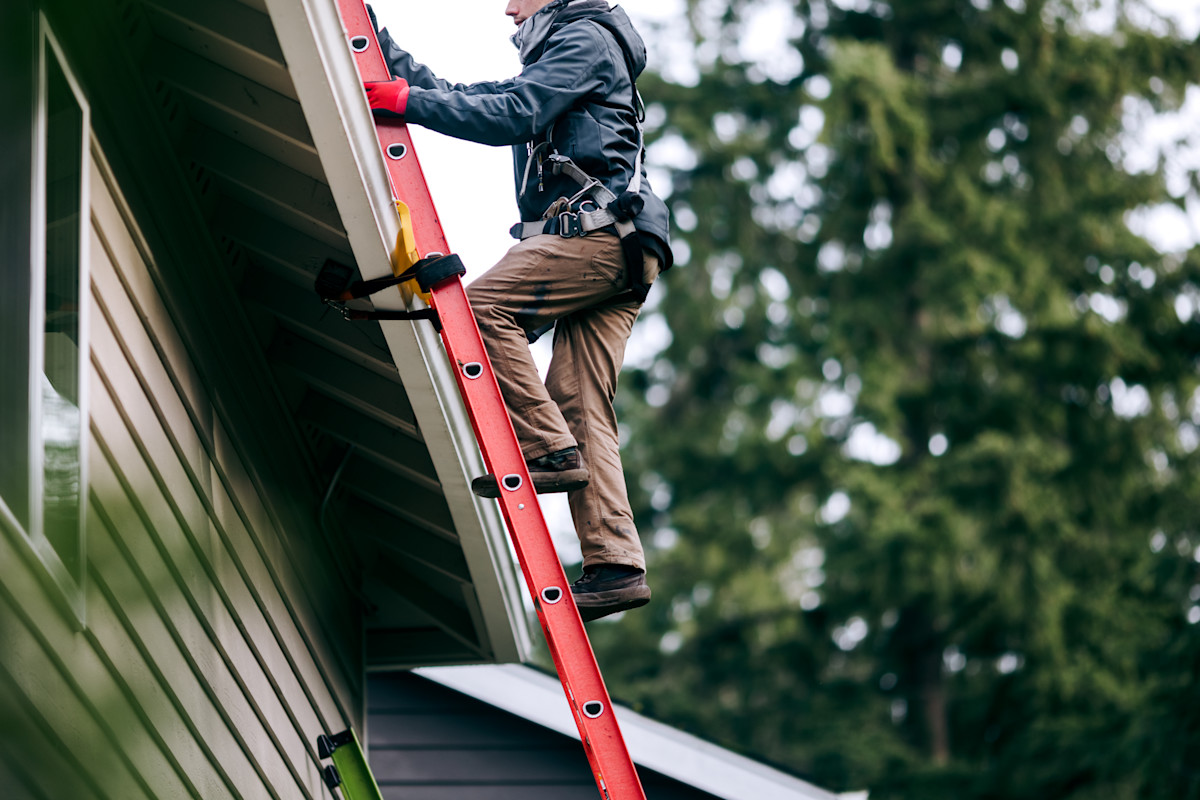
In the Northwest, the summers are drier and winters are wetter than they once were. Hymel notes these conditions have made rain storage more important. His advice: store rainwater throughout the winter in a cistern and reuse it for landscaping needs in the summer.
While weatherization is more important for older adults, Arigoni notes it can be expensive. “Older adults, particularly those on fixed incomes, often can’t afford to undertake the kind of mitigating investments in their homes needed to make them resilient,” she says.
Yet, investing in resilience provides a return on investment both over the short-term with lower utility bills, and the long-term by preventing damage that comes with deferred maintenance. Homeowners should consider making these investments at an earlier life stage, so their homes remain in good condition, and require less maintenance and investment as they age.
Still, a number of recent national programs have sought to make the upfront costs of weatherization improvements more affordable.
Tax credits and rebates, depending on the homeowner’s income level and state, can offset some costs of getting new equipment. Homeowners, for example, can save up to $3,200 in annual taxes by making energy efficiency upgrades. In addition, individual states have opportunities to apply for assistance on weatherization costs. Individual cities may also have local programs, such as the Senior Saves program in Boston which gives homeowners an $8,000 grant plus a zero-interest loan for any remaining balance to replace inefficient heating systems. Finally, a new rebate program resulting from the Inflation Reduction Act of 2022 is beginning to roll out across the country, with nine states already issuing rebates for energy efficiency improvements and more anticipated in 2025.
It all comes back to being prepared and thinking proactively about resiliency. Investing in weatherization updates now can provide financial, health, and safety benefits for years to come.
Read More Articles

In the News
Finding a Walkable Neighborhood to Step into a New Phase of Life
Research has shown that walking provides powerful health benefits, decreasing the...

In the News
Ways to Simplify Your Home by Downsizing and More
While individual homes are smaller than typical single-family homes, the development...

In the News
Creating More Resilient Housing
As 77 percent of older adults seek to age in place, having a resilient home that can...